
Top 4 OANDA vs Forex.com Broker Options 2026
Comparing OANDA and Forex.com with native broker platforms produces inconsistent results. Discover four broker comparison and trading tools that quantify fees and platform features to sharpen your research and selection workflow.
Comparing OANDA and Forex.com using only broker websites or limited charting tools produces inconsistent results and extra manual work. Most native broker platforms lack transparent, side by side analysis with fee and feature breakdowns tied directly to portfolio projections. Retail investors and individual traders can select a broker comparison tool that quantifies fees and platform features to improve research and selection workflows.
Table of Contents
- Investlytic - independent broker comparisons linked to financial calculators.
- TradingView - advanced charting with a large trading community.
- MetaTrader 4 - forex execution with Expert Advisor automation.
- Currenex - institutional grade FX liquidity and execution.
- Comparison of alternatives and our overall pick.
Investlytic

At a Glance
Investlytic reports more than 10,000 active users who rely on free broker comparisons and calculators. The site combines broker comparisons, a stock screener, and planning calculators aimed at retail investors. Its recognition in financial media supports credibility for independent analysis.
Core Features
The platform supplies broker comparison tools that place fees, platform features, and regulation in side by side tables for direct evaluation. It includes financial calculators for compound interest, mortgage, and retirement projections and a stock screener that surfaces near real time data on global equities. Educational guides and an academy provide practical walk throughs for screening and planning tasks.
Key Differentiator
The service pairs independent, real time comparisons with linked calculator outputs so fee and platform choices immediately affect projection results. That integration reduces manual transfer work and improves traceability of analysis steps. It favors measurable comparisons over narrative summaries, which helps reproduce selection decisions.
Pros
Free, data backed tools reduce the upfront cost of evaluating brokers and investment products for retail investors. The interface is accessible, and educational content shortens the learning curve for people new to screening and planning. The reported user base and financial media recognition add practical credibility when cross checking broker claims.
Cons
Limited transparency on data update frequency and real time accuracy may frustrate traders who require guaranteed live pricing.
Who It's For
Retail investors and individual traders comparing brokers on fees, platform functionality, and regulation will find clear value. People planning retirement or modeling mortgage and savings scenarios gain direct benefit from the calculators. Active professionals can use the stock screener, though they should verify update latency for execution decisions.
Unique Value Proposition
Free, side by side broker comparisons that quantify fees alongside retirement projections let users translate platform selection into portfolio outcomes. That single workflow removes the need to export numbers between multiple spreadsheets and calculators. For budget conscious retail investors, the combined comparison and projection flow shortens the time from initial research to a documented account selection.
Real World Use Case
A mid career retail investor compares three brokers side by side, then runs retirement projections using the calculators to test fee impacts. They screen stock candidates with the screener and narrow choices to brokers whose fee structures least erode projected returns. The process yields a documented decision path for account selection and asset allocation.
Website: investlytic.io
TradingView

At a Glance
TradingView reports over 100 million traders worldwide. The platform allows a free plan and trial periods without requiring credit card details. That low barrier to entry makes it easy to test charting, community ideas, and alerts before subscribing.
Core Features
Advanced charting supports multiple charts per tab, a wide indicator library, and robust drawing tools for cross instrument comparison. Built in strategy backtesting, alerts, and published scripts let traders validate ideas and automate notifications. Market coverage includes stocks, forex, crypto, futures, and metals plus community idea sharing for peer feedback.
Key Differentiator
TradingView pairs a social network with deep, customizable charting and broad market access. Public idea streams and published scripts make strategy discovery transparent and reproducible. That social layer accelerates idea validation across asset classes.
Pros
The user community supplies abundant trade ideas, comment threads, and real time feedback for technical traders. Feature depth covers multiple charts, indicators, backtesting, alerts, and data export to support research workflows. Flexible subscription tiers include a free plan and paid levels that scale from hobbyist to professional, and broker links allow execution from the same interface when supported.
Cons
- Complex interface may overwhelm new traders learning charting and scripting tools.
- Higher tier plans are required for advanced features such as additional charts and more indicators.
- Primary functionality is cloud based, so offline work is limited.
- Broker support varies by provider, so not every execution workflow is available everywhere.
When It May Not Fit
Traders who want a minimal, guided setup will find the interface dense and feature rich. Budget constrained traders may prefer a simpler, lower cost charting tool if advanced features are unnecessary. Teams that must work offline will find limited support for local charting and workflows.
Notable Integrations
TradingView connects to supported brokers for trading execution via broker links and APIs where available. Integration availability depends on each broker and the trader's region. The platform also supports script publishing that other services can reference when compatible.
Who It's For
Active traders and investors who require multi market charting, idea sharing, and strategy testing will benefit most. Technical analysts who rely on indicator combinations, backtesting, and alerts will find the toolset appropriate. Traders planning to place orders through integrated brokers gain a unified research and execution environment when supported.
Real World Use Case
A forex trader analyzes currency pairs using multiple charts and an array of indicators. They publish trade ideas to the community and refine entries with public scripts and alert signals. When the trader uses a supported broker, execution happens through broker links inside the platform.
Pricing
Plans start at $12.95/month for the Essential plan. Higher tiers add more charts, more indicators, and expanded backtesting capacity. Longer term commitments reduce cost and a free plan is available without credit card requirements.
Website: tradingview.com
MetaTrader 4
At a Glance
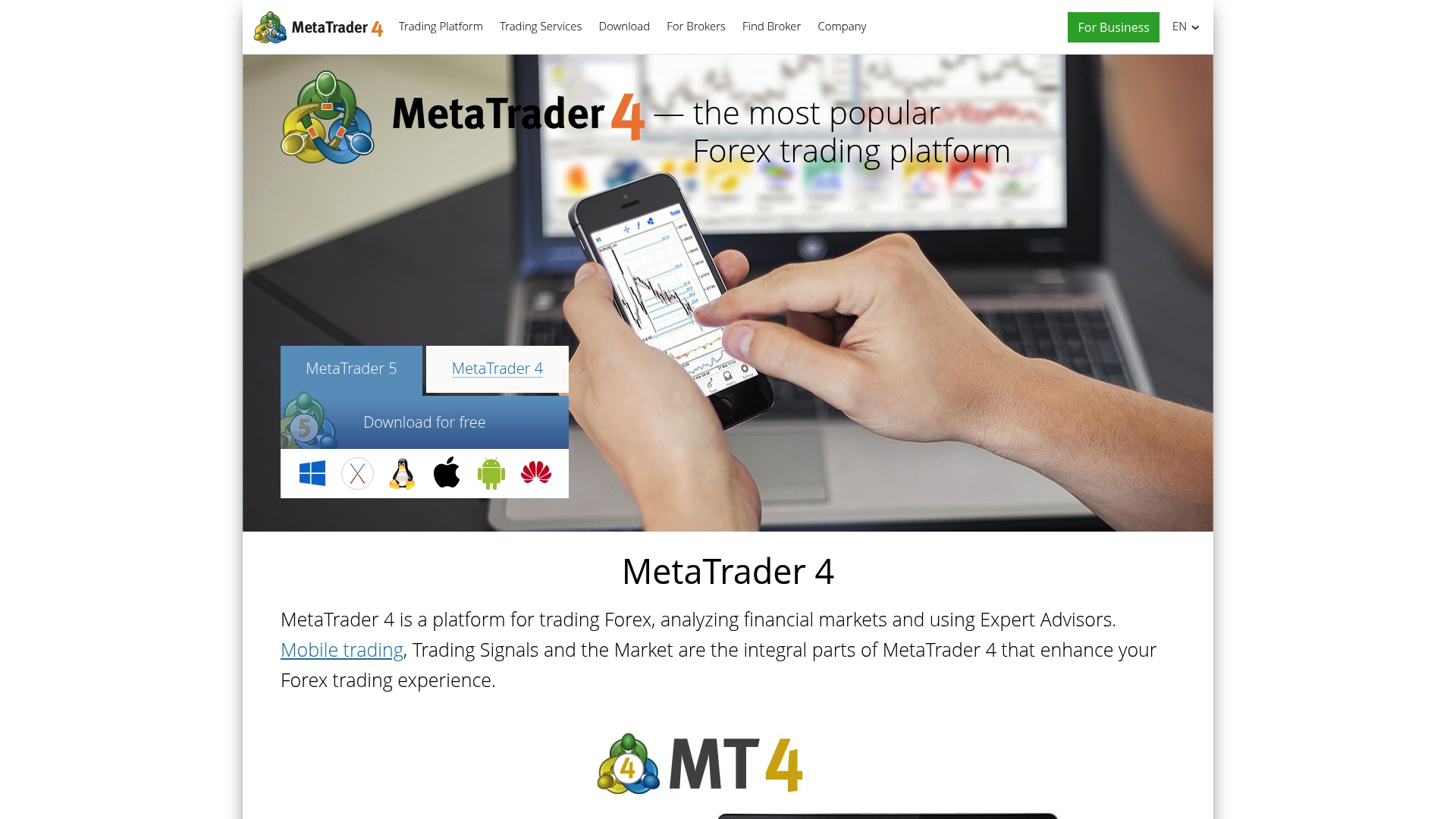
MetaTrader 4's marketing materials state decreasing support for older platform versions after July 1, 2025. The platform combines manual order entry, layered charting, and automated trading through Expert Advisors across desktop, mobile, and web. Its marketplace and scripting ecosystem support custom indicators and community shared robots.
Core Features
MetaTrader 4 provides a full forex trading stack with market and pending orders, depth of market access where brokers supply it, and layered charting tools. The platform includes advanced technical analysis tools such as indicators, templates, and multiple timeframes for systematic study. Support for Expert Advisors enables automated strategies, while mobile and web clients maintain trade access away from the desktop.
Key Differentiator
The platform's defining strength is its integrated environment for manual execution, algorithmic deployment, and community distribution of tools. Traders can write, backtest, and distribute scripts within the same terminal and access a marketplace of paid and free custom indicators. That tight coupling of execution, automation, and community content reduces the number of platform handoffs during strategy development.
Pros
Widespread broker support and an active third party developer base mean many scripts and indicators are available for reuse. The charting suite supports layering, annotations, and dozens of built in indicators for detailed technical work. Automated trading through Expert Advisors lets strategies run continuously when broker servers permit. Mobile and web clients preserve position monitoring and order entry when traders are away from their main workstation.
Cons
- Complex for new traders to fully utilize all features.
- Dependence on broker server stability and data feeds can cause execution slippage or missed signals.
- Interface density and legacy workflows make the terminal overwhelming for beginners.
- Decreasing support for older builds reduces certainty for teams maintaining legacy Expert Advisors.
When It May Not Fit
Traders without prior technical analysis experience will find the feature set dense and the learning curve steep. Firms that require guaranteed trade execution independent of broker infrastructure should avoid reliance on the terminal alone. Groups maintaining legacy EAs or older workflows should factor in the support timeline before committing to long term deployments.
Who It's For
MetaTrader 4 fits forex traders and brokers who need an execution terminal with algorithmic capability and layered charting. Algorithmic traders and retail traders deploying Expert Advisors use the scripting ecosystem for iterative development. Brokers integrating client platforms value its broad broker support and marketplace connectivity.
Real World Use Case
A retail forex trader builds an Expert Advisor in the platform's editor and backtests it across historical ticks inside the terminal. The trader then runs the EA on a demo account to validate trade logic and switches to a live broker when satisfied. Mobile and web clients keep position monitoring active when away from the desktop.
Website: metatrader4.com
Currenex
At a Glance
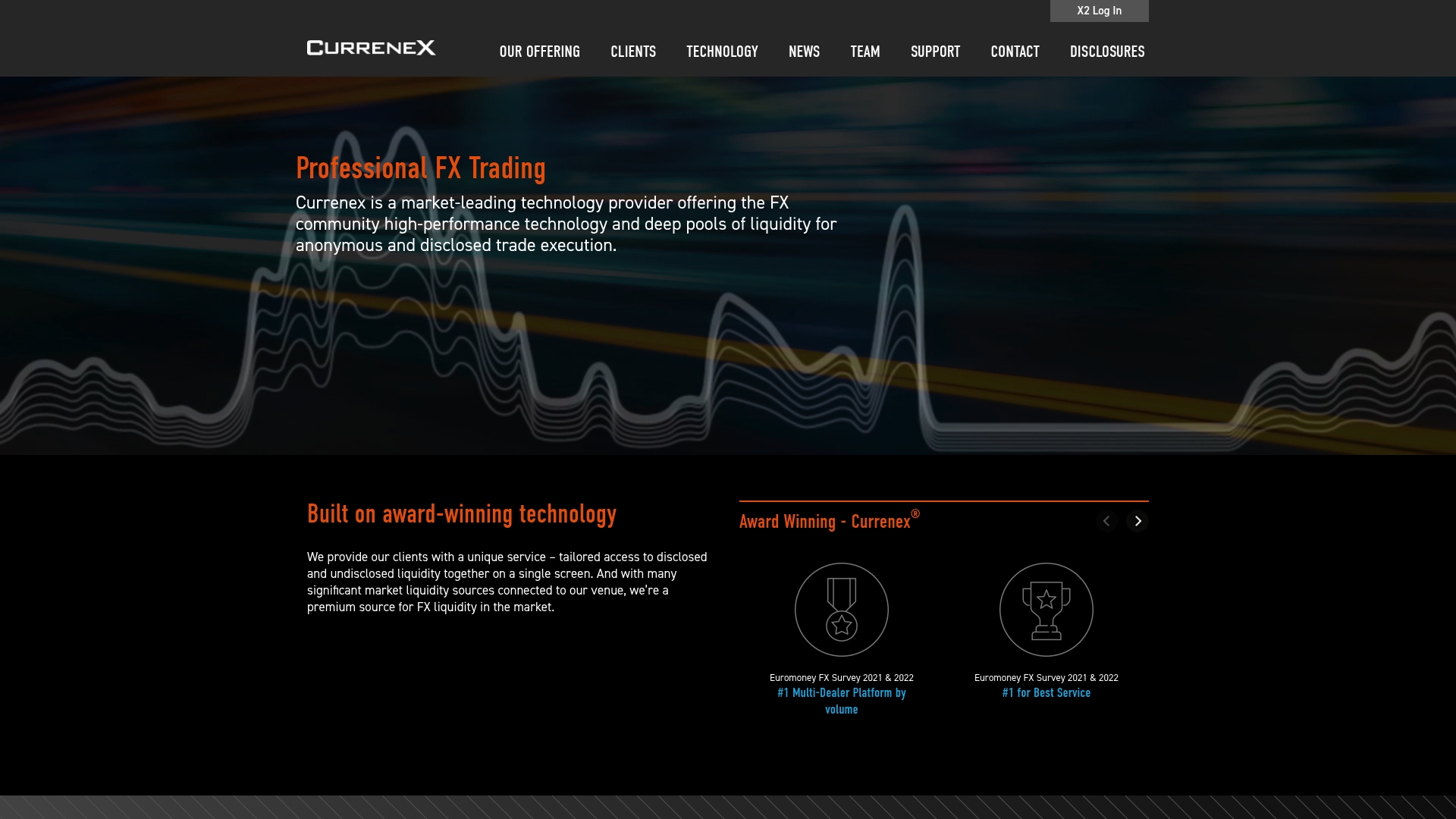
Tailored access to both disclosed and undisclosed liquidity appears on a single trading screen. Currenex combines that single view with multiple execution styles to support large and complex FX flow. This arrangement suits firms that need flexible liquidity choice without switching venues.
Core Features
High performance FX trading technology drives low latency streaming and request for quote execution, and the platform aggregates multiple liquidity streams into configurable pools. The product supports private label platform customization for brokers and banks, offers straight through processing integration, and exposes real time market data and analytics. Risk and credit management tools are built in to support oversight and regulatory reporting.
Key Differentiator
The defining capability is tailored liquidity access that presents disclosed and undisclosed sources together on one screen, allowing traders to mix anonymous and bilateral counterparties. That single screen approach reduces the need to route orders across multiple systems and keeps execution choice visible in real time. For institutions seeking control over counterparty anonymity and price discovery, this configuration changes workflow friction.
Pros
Currenex provides flexible liquidity access and multiple execution options, which lets trading desks match execution method to order size and market conditions. The platform supports a broad set of participants, including banks, hedge funds, brokers, and corporate treasuries, so it fits interbank and buy side workflows. Private label customization reduces the technical burden of launching a branded trading venue, while built in risk reporting and STP connectivity help meet oversight requirements and simplify settlement.
Cons
- Limited information about user experience and platform ergonomics is available, so hands on testing is necessary to judge daily workstation efficiency.
- Third party user reviews are not supplied, which leaves real world support responsiveness and edge case behavior unclear.
- The platform offers sophisticated features that can require substantial onboarding and training for teams without prior FX venue experience.
When It May Not Fit
Smaller retail facing brokers or individual traders will likely find the platform more complex than their needs require. Firms that need an out of the box desktop for retail customers should consider alternatives that emphasize simplicity. Organizations that cannot commit to a structured onboarding program or lack dedicated technical staff may struggle to realize the platform's full value.
Who It's For
Financial institutions and professional trading firms that need high speed foreign exchange execution and access to deep liquidity pools. Buy side traders and market makers who manage large notional trades or require private label distribution will get the most value. Corporate treasuries that handle multi currency exposures and need institutional grade controls also match the platform profile.
Real World Use Case
A hedge fund routes large FX blocks through Currenex to tap aggregated liquidity and minimize market impact. Traders use the real time data feed to assess venue depth and switch from streaming to RFQ for large orders. Built in risk tools track exposure and support the fund's compliance reporting.
Pricing
Not applicable for direct retail licensing. The platform is offered to institutional clients through vendor agreements and infrastructure arrangements, rather than as a publicly listed subscription tier. Prospective buyers must contact the vendor for commercial terms and deployment models.
Website: currenex.com
Comparison of Alternatives
When evaluating tools to support informed financial analysis and decision-making, several platforms present distinct advantages tailored to specific trading needs.
Focused Tool Strengths and Target Audiences
Investlytic excels by integrating broker comparisons with financial calculators, simplifying the transition from evaluation to planning. For users placing a premium on nuanced charting capabilities, TradingView's advanced tools and extensive indicator library stand out, making it a top choice for charting and technical analysis. Meanwhile, MetaTrader 4 targets forex traders favoring algorithmic trading, aided by its script and EA ecosystem. Lastly, Currenex serves institutional clients with FX liquidity solutions, prioritizing speed and anonymity for large transactions.
Evaluating Unique Functionalities
While Currenex focuses on high-frequency institutional workflows, MetaTrader 4 offers scripting support for algorithmic trading. TradingView enables collaborative learning with its community-driven idea-sharing platform and scripting capabilities. In contrast, Investlytic supports end-to-end planning for retail investors through integrated data analyses, offering a free-to-access platform. Each product appeals to distinct demographics based on their focused features and market expertise.
Best Fit
- Retail investors focused on broker comparison and financial planning benefit from Investlytic's streamlined analysis tools.
- Traders requiring charting flexibility and strategy sharing should consider TradingView.
- Experienced forex traders pursuing algorithm-driven execution will appreciate MetaTrader 4.
- Institutional clients managing large-scale forex operations should evaluate Currenex.
Our Pick
Investlytic effectively addresses the needs of retail investors seeking integrated planning and evaluation tools, offering a unique blend of accessibility and functionality. While other platforms dominate in specialized fields like advanced charting, institutional trading, or algorithm development, Investlytic's user-focused design and analysis workflow make it a compelling choice for personal investment strategy development.
| Product | Core Features | Best For | Pricing | Notable Limitation |
|---|---|---|---|---|
| Investlytic | Broker comparison tools, stock screener, financial calculators | Retail investors evaluating brokers and planning finances | Free | Limited transparency on data update frequency |
| TradingView | Advanced charting, community idea sharing, market research tools | Active traders needing custom charting and community insights | Plans starting at $12.95/month | Complex interface may overwhelm new users |
| MetaTrader 4 | Forex trading, automated strategies, community indicators | Algorithmic and retail forex traders | Price not published | Complex functionality challenging for beginners |
| Currenex | Tailored liquidity pools, FX execution, risk management | Institutional clients needing deep FX liquidity | Not applicable for retail | Requires substantial onboarding and training |
How to Compare OANDA and Forex.com Brokers with Greater Confidence
The challenge of evaluating brokers like OANDA and Forex.com lies in understanding fee structures, platform capabilities, and how these factors impact long-term returns. Retail investors and individual traders often require precise, data-driven comparisons to make informed choices that align with their trading strategies and risk tolerance. Investlytic addresses these needs by offering independent, side-by-side broker comparisons combined with financial calculators. This setup clarifies how costs and platform features affect portfolio outcomes.
Investlytic empowers users with transparent broker evaluations, practical retirement projections, and real-time stock screening tools designed for retail investors and individual traders. Visit Investlytic's homepage to start comparing brokers including OANDA and Forex.com, then measure fee impacts on your retirement plans with integrated compound interest calculations tailored to your investment goals.
FAQ
What features make Investlytic preferable for broker comparisons?
Investlytic provides free broker comparison tools that analyze fees, platform features, and regulations in side-by-side tables. This structured approach allows users to directly evaluate comparisons and make informed decisions. Users seeking clarity in broker choices will benefit from this feature.
How does Forex.com compare to Investlytic in terms of educational content?
Forex.com is known for its extensive educational materials aimed at beginner traders. This resource-rich environment supports new investors in understanding the market. In contrast, Investlytic focuses on providing robust comparison tools linked to practical calculators, making it ideal for those ready to evaluate and select brokers efficiently.
Which platform offers a better stock screener, Investlytic or Forex.com?
Investlytic includes a stock screener that surfaces near real-time data on global equities. This feature strengthens its tools for investors looking to analyze stock market options effectively. For users prioritizing real-time screening capability, Investlytic stands out as the preferred option.
Can retail investors use Investlytic for finding retirement planning tools?
Investlytic offers financial calculators designed for retirement projections and savings scenarios. This capability aids retail investors in planning their financial future with precision. They should expect reliable tools that integrate broker comparisons with projection scenarios for informed decision-making.
What are the advantages of using Investlytic over Forex.com for fee analysis?
Investlytic enables users to conduct direct fee comparisons alongside retirement projections, allowing for a clear understanding of how fees impact potential outcomes. This unique integration aids in translating broker selections into real-world financial impacts.
This article is for informational and educational purposes only and does not constitute financial advice. Always do your own research or consult a qualified financial advisor before making investment decisions.